
What to Do After Storm Tree Damage Birmingham
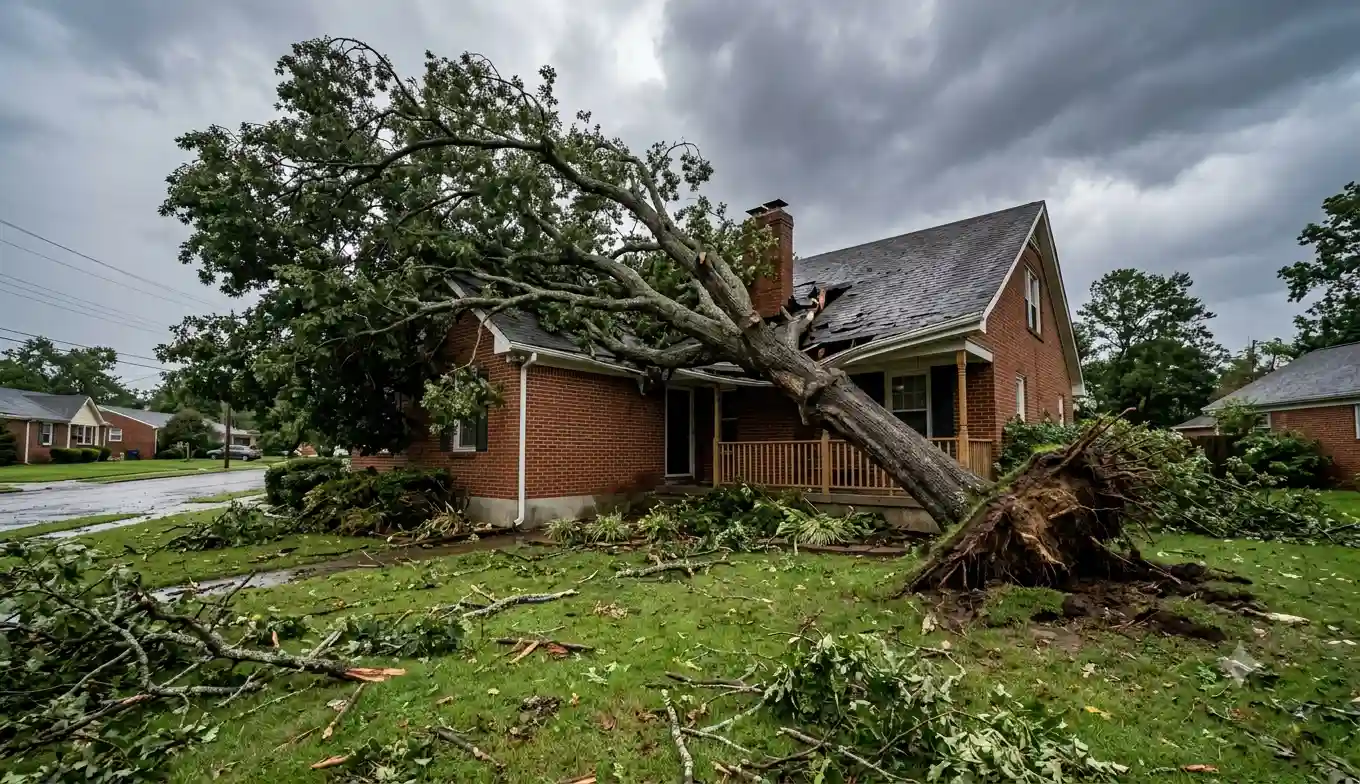
After storm tree damage in Birmingham, first check for downed power lines and gas leaks, then photograph everything for your insurance claim before touching debris. Call your insurer, then call an ISA Certified Arborist — not a random door-to-door crew — for a safety assessment. Most homeowners insurance in Alabama covers tree removal when the tree damaged an insured structure, but not if it fell in the open yard. This guide walks through every step, including who's liable when a neighbor's tree falls on your property, Jefferson County debris rules, and which Birmingham tree species fail first in storms.
Our ISA Certified Arborists provide free emergency assessments across Jefferson and Shelby Counties, 24/7.
What Counts as "Storm Tree Damage"?
Storm tree damage refers to any structural failure of a tree caused by wind, lightning, ice, or saturated-soil root failure during a severe weather event — including fallen trees, broken limbs, split trunks, and trees left leaning or partially uprooted. It's distinct from routine decline (disease, age, or pest damage that develops over months or years). This distinction matters for insurance: acute storm damage is typically covered, while damage from a tree that was already dead or declining before the storm often is not.
Immediate Safety Steps After a Storm
Before you do anything else, treat every downed line as live and every tree as unstable. More people are injured in the hours and days after a storm than during the storm itself, according to the Alabama Cooperative Extension System — usually from unsafe cleanup attempts, not the storm.
- Downed power lines: Stay at least 35 feet away from any line in contact with a tree or branch — further if the ground is wet, since water conducts the current outward. Assume it's energized even if the power is out — neighborhood generators can feed electricity back into lines. Call Alabama Power or 911 immediately; never attempt to move a line or branch yourself.
- Gas leaks: If you smell gas near a fallen tree or damaged structure, leave the area and call your gas utility from a safe distance.
- Structural stability: Don't enter a home or garage with a tree resting on the roof, even partially. Roof structures can fail hours after impact.
- Tension and spring-loaded limbs: A tree caught in another tree, or a bent branch under load, can release violently. Keep children and pets away from the entire damage zone, not just the fallen tree itself.
For a deeper walkthrough of post-storm hazard assessment, the Alabama Cooperative Extension System's post-storm tree assessment guide is an excellent independent resource.
Document the Damage Before Cleanup Begins
Photograph and Video Everything
Before anything is moved, take wide shots of the full damage area, then close-ups of the tree's break point, root plate, and any structural damage to your home, fence, or vehicle. Video walking the perimeter is even better — it captures context photos miss. Timestamp matters: most phones geotag and date-stamp automatically, which insurers appreciate.
Note What Caused the Failure
Was it wind, a lightning strike, or saturated soil from heavy rain? Was the tree healthy beforehand, or had you noticed decline? This context affects your claim — insurers distinguish between sudden storm failure (typically covered) and a tree that was already compromised (often excluded, or subject to negligence questions).
Keep Every Receipt
Emergency tarping, temporary debris hauling, hotel costs if your home is uninhabitable — save it all. Most homeowner policies reimburse reasonable emergency mitigation expenses separately from the main claim.
Whose Responsibility Is It? Alabama Liability Basics
This is the question we get asked most after a storm, and the answer surprises a lot of homeowners.
| Scenario | Who's Typically Responsible |
|---|---|
| Healthy tree falls on your own property during a storm | Your homeowners insurance covers removal + damage to insured structuresNo liability question — act of nature |
| Neighbor's healthy tree falls on your property | Your own insurance handles your damageNeighbor generally isn't liable for a healthy tree failing in a storm |
| Neighbor's tree was visibly dead/declining before falling | Neighbor may be liable if they had notice of the hazardWritten notice beforehand strengthens any claim |
| Tree falls but causes no structural damage | Generally your own responsibility to clearMany policies exclude debris removal without structure damage |
If a neighbor's tree is visibly dead, leaning, or decayed and you're worried about it, send written notice documenting the hazard — this creates a record of actual notice, which matters if it later fails. For anything beyond general guidance, a property attorney can advise on your specific situation in Jefferson County.
Filing an Insurance Claim for Storm Tree Damage
Most Alabama homeowners policies follow the same general logic, though you should always confirm specifics with your carrier:
- Covered: Tree removal when the tree damaged an insured structure — your home, garage, fence, or a parked vehicle (under comprehensive auto coverage).
- Usually not covered: A tree that fell in the open yard without hitting anything. Removal in that case is typically the homeowner's expense.
- Debris removal: Often covered up to a policy sublimit (commonly $500–$1,000), separate from the structural repair coverage.
How to File
Call your insurer as soon as it's safe — most claims windows start from your first report, not the storm date. Provide your photos/video, get a written estimate from a licensed, insured tree service (we provide documentation formatted for adjusters), and avoid signing anything with a contractor demanding full payment upfront. After major storms, unlicensed out-of-town crews canvass Birmingham neighborhoods — always verify insurance before anyone starts cutting on your property.
DIY, Call Now, or Schedule Later? A Decision Framework
- 🚨Call now (same-day): Tree on a structure, blocking an exit, near a downed power line, or leaning with soil heaving at the base.
- ⚠️Schedule this week: Large broken limbs still hanging ("widow-makers"), a split trunk not yet fallen, or debris blocking a driveway with no immediate structural risk.
- ✅DIY is reasonable: Small fallen branches under 4–6 inches diameter, away from structures and power lines, that you can safely drag and stack.
For a full breakdown of tree condition warning signs beyond storm damage — including how to tell whether a tree was already declining before the storm hit it — see our guide on signs a tree is dying.
Debris Disposal in Jefferson County
After widespread storms, Jefferson County and individual municipalities typically set up temporary storm debris collection points and curbside pickup schedules — check your specific city's website, since Birmingham, Hoover, Vestavia Hills, and Homewood each manage this separately and schedules shift based on storm severity. General rules that hold across most of the metro:
- Separate vegetative debris (limbs, brush, logs) from construction debris and household trash — mixed piles are often skipped by storm cleanup crews.
- Keep debris piles off the street itself; place at the curb on your property line to avoid drainage blockage.
- Cut sections to a manageable length (usually under 6 feet) if your municipality requests it for chipper trucks.
For details on general debris clearing after severe storms, the Alabama Cooperative Extension System's debris clearing guide covers the process in more depth. We also handle full debris hauling as part of our tree removal service, so you don't have to coordinate separate pickup at all.
Which Birmingham Trees Fail First in Storms
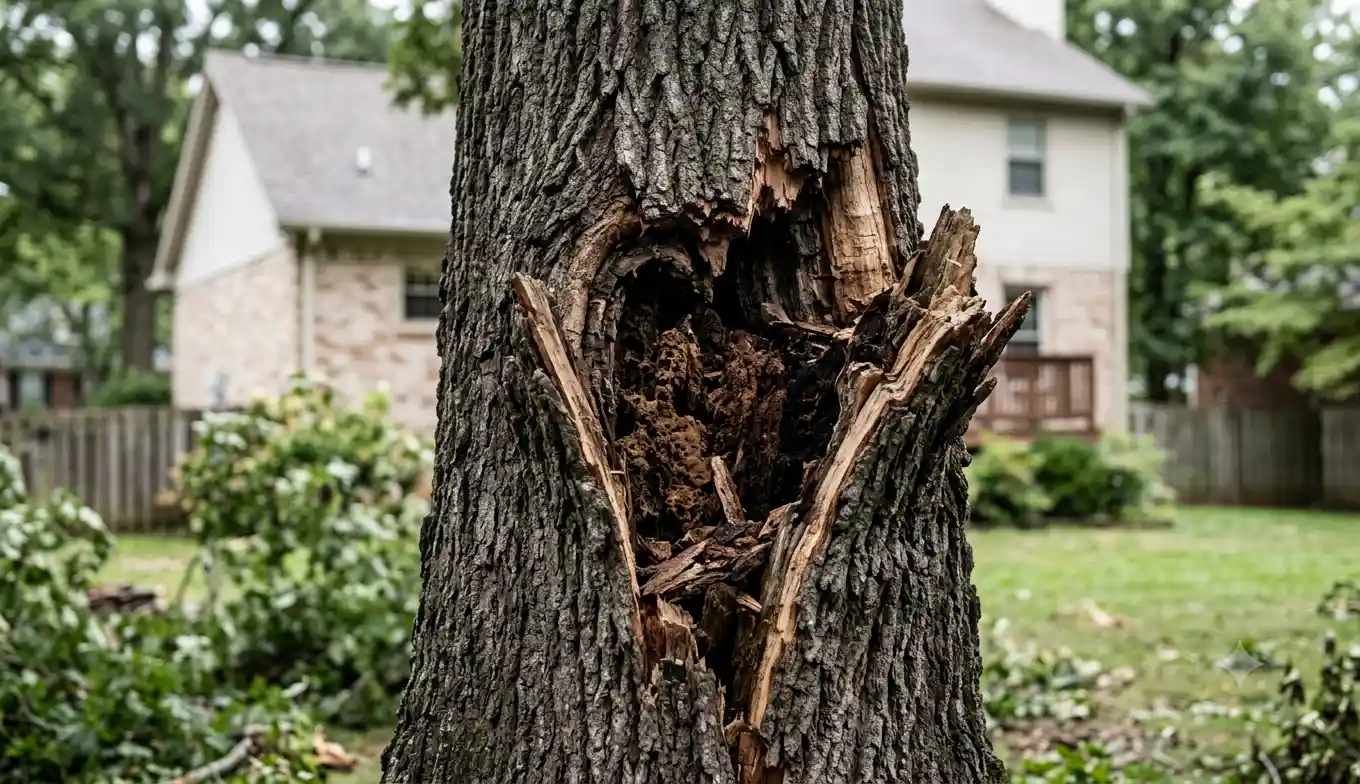
Water Oak
Among the most common storm-failure trees in Jefferson County. Shallow, wide-spreading root systems and a tendency toward internal decay as they approach 80–100 years make mature Water Oaks especially prone to snapping or uprooting in high winds — even when they look outwardly healthy.
Bradford Pear
Structurally weak branch unions (included bark in tight V-shaped crotches) make Bradford Pears prone to catastrophic splitting in storms. They're common throughout Hoover, Trussville, and Alabaster subdivisions. If yours split in a recent storm, this is typically a case for full removal rather than repair — see our permit guide if you're unsure whether removal requires paperwork in your city.
Loblolly Pine
Common in Trussville and the eastern suburbs. Loblolly Pines are generally wind-resilient when healthy, but become brittle and failure-prone when stressed by Southern Pine Beetle infestation or drought — a storm often finishes what the beetles started.
What Storm Cleanup Typically Costs
Storm-related removal tends to run at the higher end of typical Birmingham pricing — not because of price gouging, but because crews are stretched during high-demand periods and jobs often require emergency protocols and after-hours work. For the full pricing breakdown by tree size, species, and access difficulty, see our complete tree removal cost guide for Birmingham. If your storm damage left a stump behind, our stump grinding vs. removal cost guide breaks down that decision too.
Do You Need a Permit to Remove a Storm-Damaged Tree?
In most Jefferson County municipalities, dead or storm-hazardous trees posing an immediate safety risk are exempt from standard permit requirements, or fast-tracked through emergency provisions — but rules vary by city, and some heritage or protected-species trees carry stricter requirements even after storm damage. Our full tree removal permit guide breaks down the requirements city by city, including Mountain Brook, Homewood, and Vestavia Hills.
For the technical side of safe post-storm chainsaw work around damaged trees and power lines, the Alabama Cooperative Extension System's post-storm landscape safety guide is worth reading before anyone picks up a saw.
Why Birmingham Storms Are Especially Hard on Trees
Jefferson County's red clay soil compacts easily and drains poorly, which weakens root anchoring during saturated, high-wind events. Combine that with a tree canopy dominated by Water Oaks and Loblolly Pines — both prone to specific failure modes — and a mix of tornado, straight-line wind, and ice events across the year, and Birmingham sees a genuinely higher storm-tree-failure rate than many neighboring regions. That's also why proactive tree health and regular trimming materially reduce your risk before the next storm rolls through.
Frequently Asked Questions — Storm Tree Damage in Birmingham
First, check the area for downed power lines and gas leaks and keep everyone away from the damage zone. Photograph and video the damage before anything is moved or cleaned up. Call your homeowners insurance to start a claim, then contact an ISA Certified Arborist for a safety assessment — especially if any tree is leaning, cracked, or resting on a structure. Avoid hiring unlicensed crews that canvass neighborhoods after storms; always verify insurance before work begins.
Usually — but only under certain conditions. Most Alabama homeowners policies cover tree removal when the tree damaged an insured structure, such as your home, garage, or fence. If a tree falls in the open yard without hitting anything, removal is generally the homeowner's own expense. Debris removal is often covered separately, up to a policy sublimit. Always confirm your specific policy's terms with your insurer, since coverage details vary by carrier.
Under Alabama property law, a homeowner is generally not liable for damage caused by a healthy tree that fails during a storm — this is treated as an act of nature, and the affected property owner's own insurance typically handles the damage. Liability shifts only if the tree was visibly dead, diseased, or structurally compromised before the storm, and the owner knew or should have known about it. If you're concerned about a specific neighboring tree, sending written notice of the hazard beforehand strengthens any future claim.
It depends heavily on the extent of damage. A tree with minor broken branches and an otherwise intact canopy can recover over one to two growing seasons with proper pruning. A tree with major root plate disturbance, a significant new lean, or more than 25% canopy loss often does not recover safely and is typically a removal candidate rather than a recovery candidate. An ISA Certified Arborist can assess your specific tree and give you an honest recommendation either way.
If your tree was healthy and fell during a storm, this is generally treated as an act of nature under Alabama law, and you would not typically be liable — your neighbor's own insurance would handle their damage. However, if your tree was visibly dead, diseased, or hazardous before it fell and you were aware (or reasonably should have been), you could face liability for negligence. This is why documenting tree health and addressing visible hazards proactively is worth doing before storm season, not after.